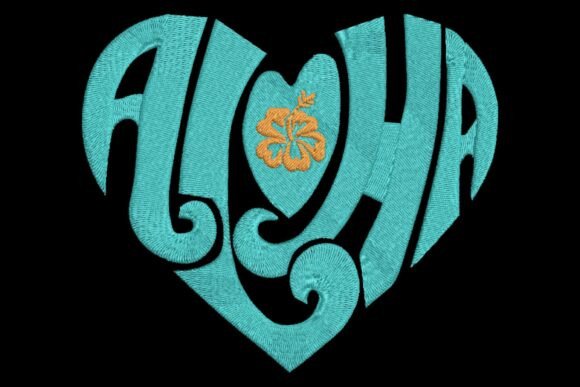
Aloha Heart: A Professional Embroidery Design Review
As an embroidery designer who spends countless hours curating design assets for both personal passion projects and commercial client work, I approach every new download with a critical eye. The market is flooded with generic patterns, but finding a piece that balances whimsy with structural integrity is rare. Recently, I downloaded the Aloha Heart from Creative Fabrica to test its viability for an upcoming Summer collection. This review details my honest evaluation of how this design performs in real-world scenarios, from initial visual inspection to the final stitched result on various fabrics.
First Impressions: Visual Mood and Stitch Personality
Upon opening the digital embroidery file, the first thing that strikes you is the charming aesthetic. The Aloha Heart is not just a simple outline; it carries a distinct tropical vibe that feels both graceful and playful. The design features clean lines and a layout that suggests a mix of satin stitch for definition and fill stitch for texture. In the preview, the motif appears balanced, avoiding the common pitfall of being too top-heavy or lopsided.
For a professional embroiderer, the "stitch personality" is crucial. Does the design look like it was digitized by a human who understands fabric behavior, or is it a rushed auto-digitization job? The Aloha Heart feels intentional. The curves are smooth, suggesting that when stitched, they will flow naturally without jagged edges or excessive trims. This level of detail makes it immediately appealing for projects where visual appeal drives sales, such as boutique merchandise or high-end handmade gifts.
Performance in Real-World Embroidery Projects
The true test of any machine embroidery design lies in its application. I evaluated the Aloha Heart against several potential use cases to determine its versatility. Here is how it holds up across different product categories:
- Custom Apparel: For tote bag design and lightweight t-shirts, the density of the Aloha Heart seems appropriate. It does not appear overly dense, which reduces the risk of puckering on thin cottons. However, if you plan to use this for sweatshirt embroidery, you must ensure the stabilizer is robust enough to support the weight of the stitches without sinking into the fleece.
- Home Décor and Linens: The description mentions towels and pillows, and the design fits these perfectly. On a kitchen towel, the Aloha Heart adds a cheerful touch that withstands frequent washing. For pillow covers, the size appears scalable, making it suitable for both small accent pillows and larger throw cushions.
- Patches and Caps: If you are creating an embroidered patch, this design offers clear boundaries. For caps, the curved surface can be tricky with heart shapes, but the symmetry of the Aloha Heart helps maintain alignment even on the rounded brim of a baseball cap.
- Baby Items and Gifts: The whimsical nature of the design makes it ideal for baby blankets or nursery decor. It serves as a perfect personalized gift element, especially when paired with monogramming (though you would need to add text separately).
Practical Considerations for Commercial Use
When moving from a hobbyist mindset to running a small business or managing Etsy listings, practical constraints become paramount. Before committing the Aloha Heart to a production run, there are specific technical factors to address.
Hoop Size and Stabilizer Requirements
One of the most critical steps is confirming the hoop size. While the product page provides dimensions, always verify them against your specific machine hoops. If the design is large, you may need a 5x7 hoop, whereas a smaller version might fit in a 4x4. Using the wrong hoop size can lead to registration issues or incomplete stitching. Furthermore, the type of fabric dictates the stabilizer choice. For stretchy fabrics like jersey or knit tees, a tear-away stabilizer might not suffice; a cut-away or water-soluble option is often necessary to prevent the Aloha Heart from distorting over time.
Stitch Density and Thread Colors
Density is the enemy of quality if not managed well. In areas where the Aloha Heart uses heavy fill stitch, I recommend testing on scrap fabric first. High density on dark fabrics can sometimes create a stiff, plastic-like feel. Conversely, on light fabrics, insufficient density might show the backing through. When selecting thread colors, consider contrast. A white thread on a cream tote bag lacks impact, while a vibrant coral or turquoise against navy blue brings out the tropical essence of the design. Always compare light and dark fabric mockups before finalizing your color palette for customer orders.
Licensing and Commercial Rights
For those selling finished goods, understanding the license is non-negotiable. Creative Fabrica offers various tiers, and it is essential to confirm the terms on the product page before selling items featuring the Aloha Heart. Ensure your subscription or purchase grants rights for commercial embroidery products. Misunderstanding licensing can lead to account suspensions on platforms like Etsy or legal issues down the line. Always double-check if the license allows for unlimited physical product sales or if there are restrictions on the number of items sold.
Enhancing Product Value and Brand Consistency
In the competitive world of handmade shops and craft fairs, the quality of your design directly influences buyer trust. The Aloha Heart elevates a standard item into a curated piece. Its decorative appeal suggests care and attention to detail, which increases the perceived value of the finished product.
Using consistent, high-quality designs like this helps build brand identity. If your shop specializes in summer-themed home goods, incorporating the Aloha Heart into your catalog creates a cohesive look. It aids in product photography as well; a well-executed embroidery design photographs beautifully, highlighting texture and depth in images that drive customer engagement. Whether you are listing a custom apparel item or a seasonal gift set, the visual consistency provided by a reliable Creative Fabrica embroidery asset can differentiate your store from competitors using generic clip art.
Final Verdict: Is Aloha Heart Worth It?
After reviewing the Aloha Heart through the lens of a working designer, the verdict is positive. It is a versatile, well-drafted embroidery file that successfully captures a Summer mood without sacrificing technical quality. It is particularly strong for tote bags, home linens, and casual apparel where a touch of whimsy is desired.
However, success still depends on your execution. Always perform a test run on similar fabric to check for puckering, verify your running stitch settings for outlines, and ensure your stabilizer supports the design's weight. If you follow these best practices, the Aloha Heart is a valuable addition to your digital library, ready to enhance your next batch of handmade creations.